
3rd December marks the International Day of Persons with Disabilities, a day to
promote the rights and wellbeing of people with disabilities across all areas of
society, and to raise awareness of the importance of inclusion. The 2025 theme,
“Fostering disability inclusive societies for advancing social progress”, underscores
the principle that genuine progress is only possible when everyone is included.
According to UNICEF, nearly 240 million children worldwide are living with
disabilities. Yet millions continue to be left behind and denied their right to education.
Children with disabilities are more than twice as likely to be out of school compared
with their peers without disabilities. Girls with disabilities face even greater
disadvantage, as they may experience both disability- and gender-based
discrimination. These challenges are further compounded for those living in poverty
or in crisis-affected contexts, highlighting the intersecting identities and diverse
experiences of people with disabilities.
At READ Foundation, we uphold the fundamental right of every person to education.
Guided by Sustainable Development Goal 4, we are committed to ensuring inclusive
and equitable quality education and promoting lifelong learning opportunities for all.
Our work focuses on dismantling the barriers to education experienced by
marginalised groups, including people with disabilities.
Our three-year ‘Empower Her’ project in Pakistan aims to improve basic literacy and
numeracy among out-of-school girls in remote communities. 3,600 girls are enrolled
across 120 community-based accelerated learning spaces, supported by 120 trained
teachers delivering child-friendly, activity-based learning. To promote inclusion, we
are supporting and guiding teachers to tailor their teaching methods and adapt
lesson plans to meet the individual needs of students with disabilities, and collecting
these girls’ experiences to inform programme decisions. We have also supported the
identification and certification of girls with disabilities, enabling access to local
disability support services.
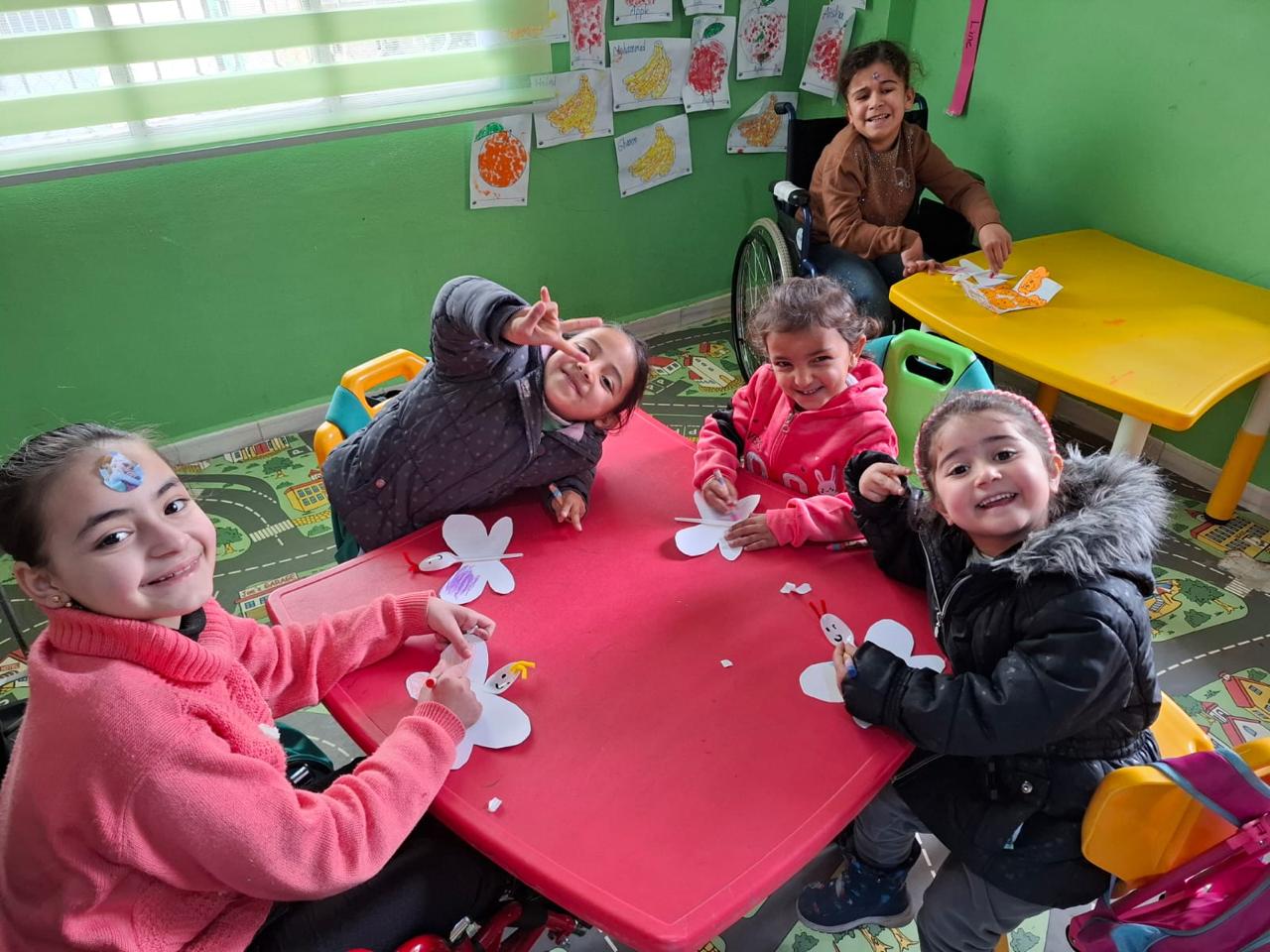
Now in its fourth year, our Special Needs Education Hub (SNEH) in Lebanon
continues to narrow the educational gap for refugee children aged 6 -12 with
physical, sensory, and learning disabilities. Through tailored support in literacy,
numeracy and life skills, SNEH helps children build confidence, communication, and
independence, enabling many to transition successfully into formal schooling. The
programme also integrates child safeguarding measures adapted specifically for
children with disabilities, ensuring their dignity, participation, and protection from
neglect or abuse.
Across all our programmes, we are strengthening our support for children and young
people with disabilities through continuous improvements to make our interventions
more inclusive. This includes enhancing our data collection to ensure accurate,
detailed information about the diverse groups we serve, enabling us to track impact
more effectively and adapt our programmes to better meet individual needs. These
efforts are helping to ensure that marginalised groups – including people with
disabilities – are recognised, represented, and included.
On this International Day of Persons with Disabilities, we reaffirm our commitment to
advancing disability inclusion in education – ensuring that when we say education for
all, we truly mean all.